Workshop 2: What Does It Take to Build a Startup? Marketing & Finance Tools for Changemakers
Oct 26, 2025
Arrival & Check-in
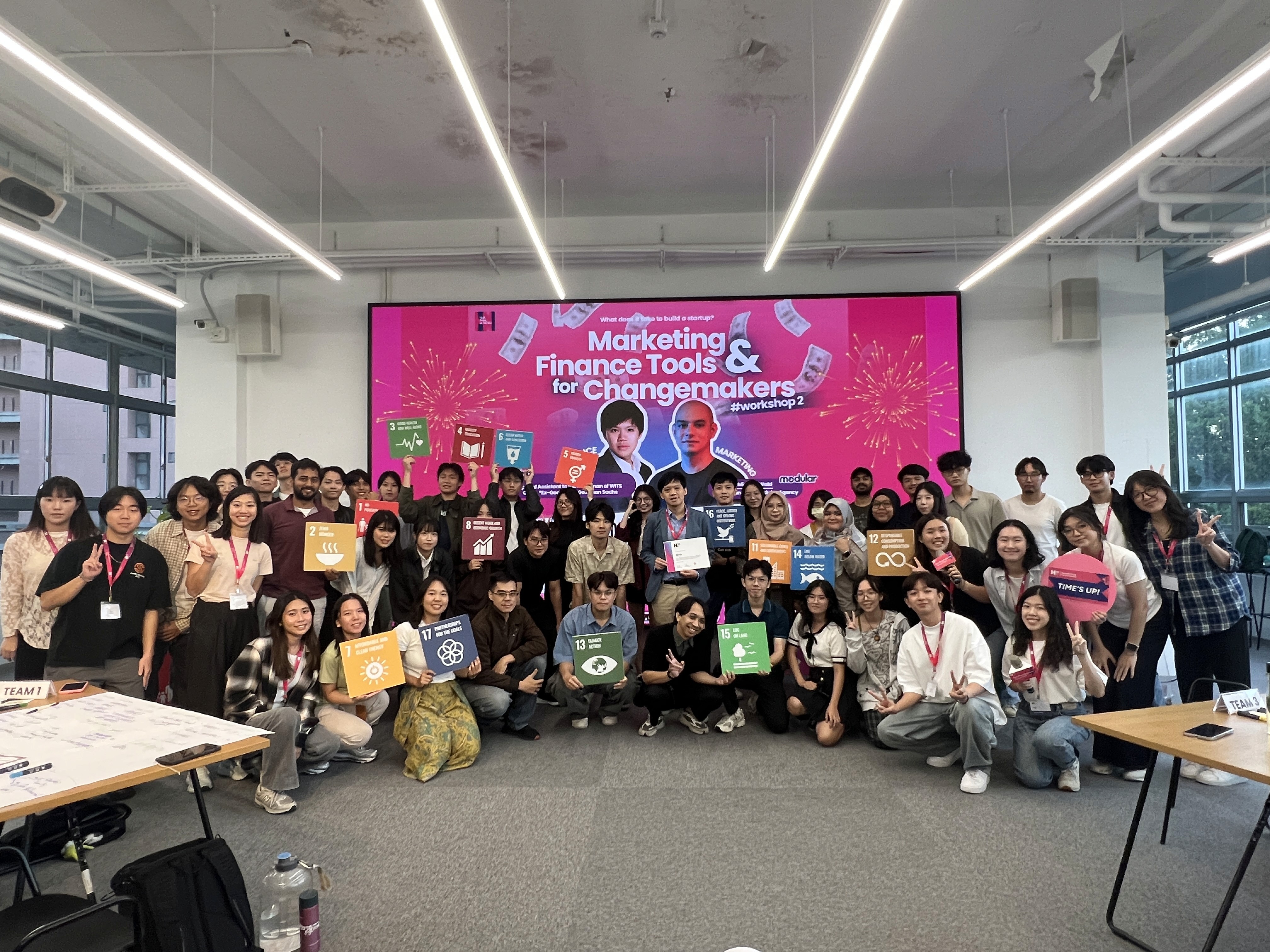
The second workshop of the Hult Prize at NCKU took place on Saturday, October 25th, 2025, at Atelier Future, with check-in beginning at 13:30. MCs Kass and Yuki welcomed participants at the entrance, guiding them through registration and helping everyone settle into their seats. Attendees chatted with one another as the venue filled, creating a warm and lively atmosphere before the official program began at 13:40.
Opening Remarks
The MCs opened the afternoon by introducing the workshop theme — “What Does It Take to Build a Startup? Marketing & Finance Tools for Changemakers.” They also expressed appreciation to supporting partners including Atelier Future, Sino Bank, SDSN, 志光數位學院, 橘子水漾, and Gennue Lab.
Campus Vice Director Bryant then delivered a welcome speech, encouraging students to take risks, think creatively, and engage fully with the entrepreneurial process. His message set an inspiring tone for the rest of the workshop.
Agenda Brief
The MCs provided a quick overview of the day’s schedule, highlighting two speaker sessions focused on marketing strategies and financial tools, along with interactive group activities and closing networking time. The room responded with enthusiasm when the MCs asked, “Are you ready?”, signaling high energy for the sessions ahead.
Icebreaker: Kahoot!
To warm up the room, participants took part in a Kahoot! quiz centered on Hult Prize facts and fun trivia. Using their phones, attendees competed eagerly, filling the venue with laughter and friendly competition. The top scorers were invited on stage to receive small prizes.
The MCs wrapped up the game by reminding participants that true impact comes not just from knowing information, but from applying it—especially when communicating and promoting innovative ideas.
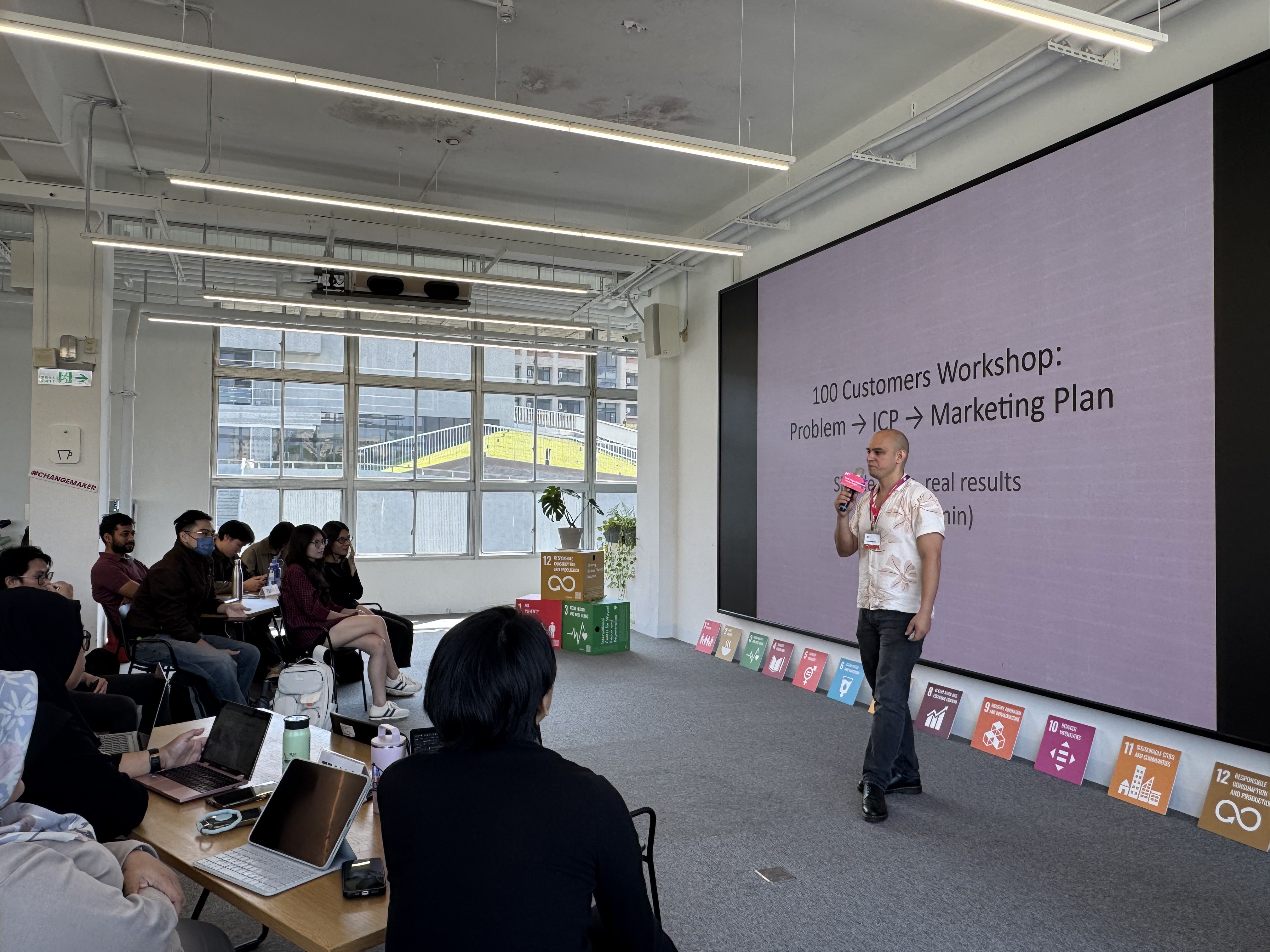
Speaker Session 1 — Marketing for Impact: Reaching Your First 100 Users
Speaker: Michael Wald
Wald shared practical insights from his entrepreneurial journey, emphasizing the importance of understanding users and validating real needs before building solutions.
He highlighted three key ideas:
Start with the problem: Many ideas fail because the problem isn’t painful enough. If people don’t care, they won’t use or pay for the product.
Focus on a clear audience: Defining a small, specific target group makes it easier to understand needs and create effective marketing.
Test demand early: True interest shows when users are willing to act immediately — whether by paying, signing up, or responding quickly.
He encouraged students to stay close to their market, observe user behavior, and build from a well-defined niche.
Speaker Session 2 — Finance Fundamentals for Startups
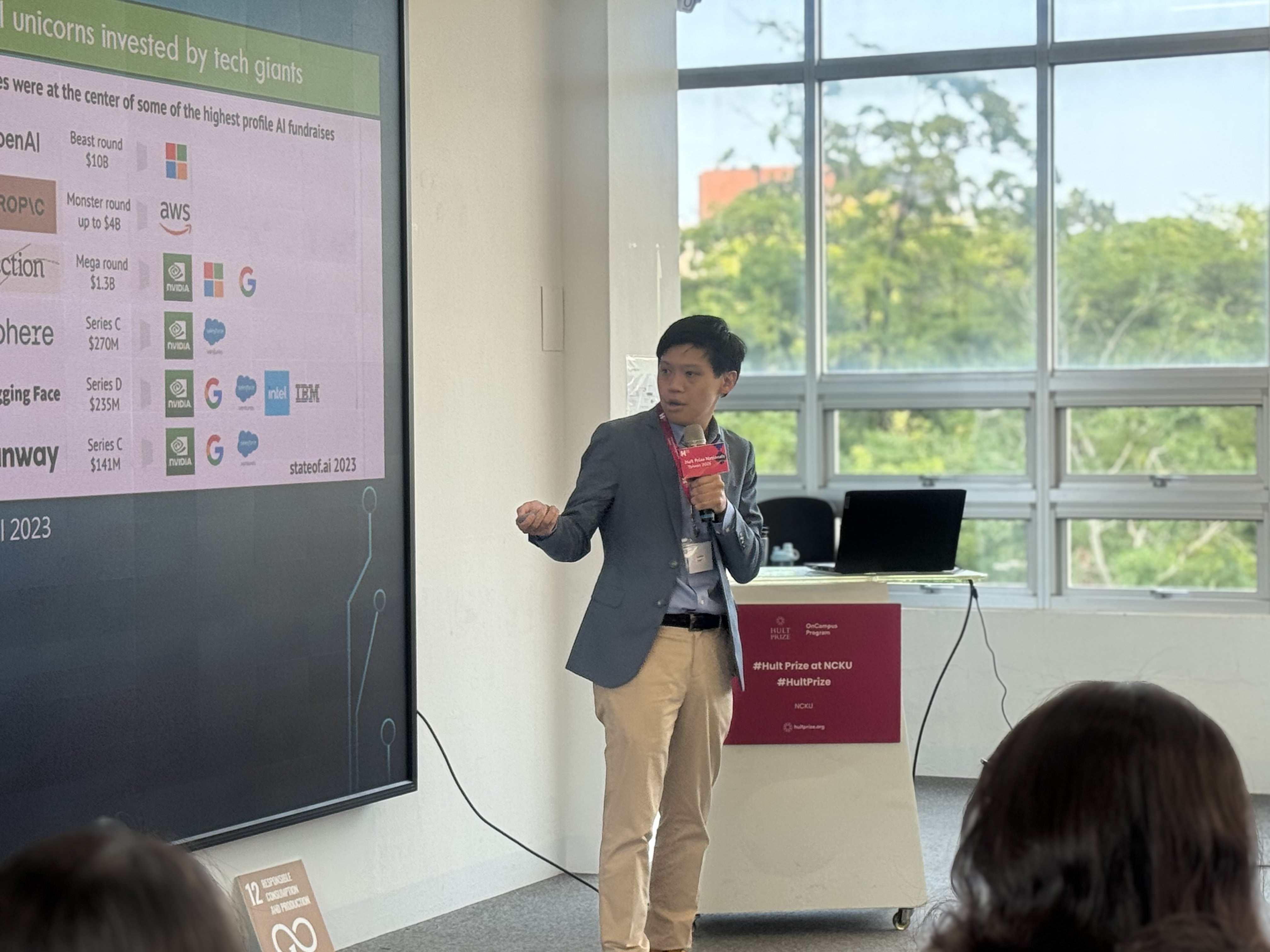
Speaker: Jim Liu
Liu discussed the financial basics every early-stage founder should understand. His core message: a great idea needs strong financial planning to survive.
Key points included:
Know your numbers: Startups often fail due to poor budgeting. Understanding costs, runway, and funding needs is essential.
Choose the right funding path: From bootstrapping to grants and angel investment, each option suits different stages of a startup.
Plan realistically: Simple tools like Google Sheets and Lean Canvas are enough to forecast revenue, estimate market size, and test assumptions.
Leverage new trends: AI is reshaping business models and investor priorities. Founders who integrate technology and sustainability gain an advantage.
He encouraged students to validate ideas quickly, stay disciplined with spending, and use data to guide decisions.
Feedback Survey & Lucky Draw
Participants filled out the feedback survey to share insights and suggestions for future events. A small lucky draw added excitement and closed the workshop on a cheerful note.
Wrap-up
The workshop concluded with closing remarks and a group photo. The organizing committee also expressed appreciation to partners such as Atelier Future, Sino Bank, SDSN, 志光數位學院, 橘子水漾, and Gennue Lab, whose support made the event possible.
Participants left with valuable knowledge in both marketing and finance, equipping them with the practical tools needed to continue shaping their Hult Prize projects into sustainable, impactful ventures.